Table of contents
The global retail map is shifting again, and this time it is not being redrawn by big-box expansions or yet another wave of online marketplaces, but by something smaller, more tactile, and, for many shoppers, more emotionally legible. From New York to Paris and Seoul, boutique openings, curated pop-ups, and neighborhood concept stores have multiplied in the past two years, even as footfall remains uneven and costs keep rising. The question is no longer whether “brick and mortar” still matters, but whether the boutique boom is changing how people build a personal style, one that feels authored rather than algorithmically assigned.
Small stores, big shift in how we shop
Is the boutique comeback just nostalgia, or a measurable change in behavior? The data points to a real rebalancing between mass retail, e-commerce, and in-person discovery, and while the “death of the store” narrative never fully matched reality, the post-pandemic era has accelerated new reasons to visit physical spaces. In the United States, e-commerce represented 15.6% of total retail sales in 2023, according to the U.S. Census Bureau, a sizable share but far from a full takeover, and physical retail still captures the overwhelming majority of consumer spending. In Europe, the picture is similar, and when inflation pressures households, shoppers often become more deliberate, buying fewer items but seeking stronger value per purchase, whether that value is durability, originality, or the confidence of trying something on and seeing it in real light.
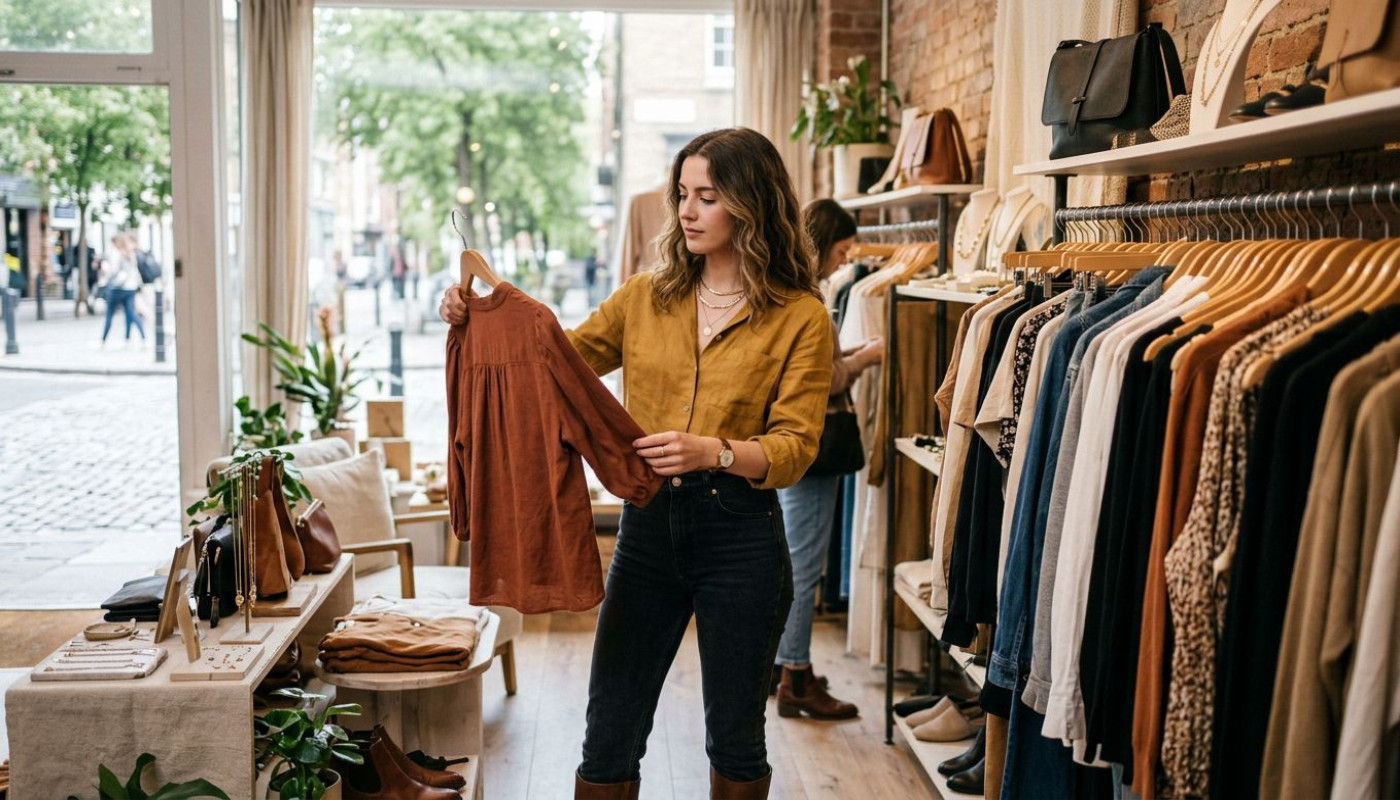
That is where boutiques have found an opening. Many are positioned as antidotes to the endless scroll: edited selections, knowledgeable staff, and racks that look less like inventory management and more like a point of view. The format also reflects how brands have changed their distribution strategies, because direct-to-consumer is no longer only “online-first”; it is increasingly “relationship-first,” with showrooms, small flagships, and local collaborations designed to create repeat visits rather than one-off conversions. Commercial real estate dynamics help, too, as some high streets have re-priced after vacancies and renegotiations, giving smaller players a foothold that would have been unthinkable in the late 2010s. The result is a retail landscape where the boutique is not merely surviving alongside e-commerce, but offering something the web struggles to replicate: context, curation, and the feeling of being seen as an individual shopper rather than a segment in a dashboard.
The algorithm dressed us, then bored us
Can personal style thrive when platforms reward sameness? Over the past decade, recommendation systems have done what they were designed to do: reduce friction, surface “relevant” products, and convert attention into purchases, and in fashion, that often means feeding users variations of what already performs well. Researchers and cultural critics have popularized the idea of “algorithmic taste,” a loop in which engagement incentives narrow what people see, what influencers promote, and what brands replicate, and even without accepting the concept as destiny, most shoppers recognize the sensation: the same silhouettes, the same colorways, the same micro-trends arriving everywhere at once, then vanishing just as quickly.
Yet boredom is a powerful market force, and it is colliding with another pressure: trust. The online fashion marketplace is crowded with counterfeit risks, misleading listings, and inconsistent sizing, and consumers increasingly complain about the cost of returns, both financial and psychological. In the U.S., the National Retail Federation has repeatedly highlighted how returns have climbed as a share of sales in recent years, with overall return rates around the mid-teens, and “bracketing,” ordering multiple sizes with the intent to return most, has become a common coping mechanism. Boutiques, by contrast, can reduce that uncertainty through fit advice, fabric explanation, and styling suggestions that change how an item will actually be worn, not just how it photographs.
This is where the boutique boom intersects with identity. Personal style is not only about buying a garment; it is about developing a vocabulary, learning what works with your body and your life, and building outfits that make sense beyond a single moment. In many cities, boutique staff have become informal stylists for regulars, and the store itself becomes a kind of reference library: you return to check cuts, to compare textures, to see what “new” looks like without surrendering to the feed. For shoppers who want to step outside the trend cycle without abandoning fashion altogether, boutiques offer a slower, more intentional route, one that can feel like reclaiming authorship after years of being nudged by invisible hands.
Inside the boutique: curation as a service
What are customers actually paying for? Often, the answer is not just the garment, but the edit. Curated retail has long existed at the luxury end, but the current wave of boutiques increasingly operates in a wide middle ground, mixing emerging labels, vintage pieces, limited runs, and accessories that would be hard to find through a single brand’s site. This model is not merely aesthetic; it is economic. By spreading risk across multiple suppliers and focusing on drops rather than huge seasonal buys, boutiques can stay nimble, and by telling a coherent story, they can justify prices that are higher than fast fashion but lower than heritage luxury.
In practice, curation becomes a service that many shoppers cannot easily replicate alone. A good boutique filters out the noise, anticipates what will work together, and introduces “bridge” items that help people wear what they already own in new ways, and this is a subtle but significant shift in how personal style develops. Instead of purchasing isolated pieces that match a trend, customers are coached toward building wardrobes with continuity, where a jacket speaks to multiple outfits and a pair of shoes fits both a workday and a weekend. That emphasis aligns with the growing interest in longevity, even among consumers who do not define themselves as “sustainable fashion” advocates, and it dovetails with the resale market’s rise, which has helped normalize the idea that fashion value can persist beyond a single season.
Crucially, boutiques also provide access to subcultures and niche aesthetics that mainstream retail rarely serves well. Street styles linked to specific neighborhoods or youth scenes can be flattened online into a few purchasable keywords, but in specialist stores, the references are richer, the silhouettes more precise, and the styling guidance more faithful to the look’s origins. For readers curious about how distinct fashion communities build identity through clothing, and how those ideas travel across borders without losing all their specificity, it can be useful to see page for a window into the kinds of localized style ecosystems that boutiques often amplify rather than dilute. The appeal, for many shoppers, is not to copy a uniform, but to learn the grammar of a look and then write their own sentences with it.
When “personal style” becomes a local economy
Could the boutique boom reshape cities as much as closets? There is a broader economic story here, because boutiques do not operate in isolation, they cluster. When small retailers gather on a street, they create foot traffic for cafés, salons, galleries, and tailors, and they turn shopping into an afternoon rather than a transaction. City officials and landlords have noticed, and in some markets, local governments have experimented with grants, reduced permitting friction, or “small business first” initiatives aimed at keeping commercial corridors from becoming monocultures of chains and vacancies. The policy details vary widely, but the impulse is consistent: independent retail can function as place-making, and place-making has economic value.
For shoppers, that local dimension can be as important as the clothes. The boutique experience often includes alteration recommendations, repair networks, and relationships with nearby craftspeople, and those services change how garments are treated over time. When hemming is easy and repairs are normal, people keep pieces longer, and personal style becomes less about constant replacement and more about refinement. The strongest boutiques also act as cultural translators, bringing in brands from abroad, explaining why a cut is meant to sit a certain way, or why a fabric behaves differently in humid summers than in dry winters, and that education can make consumers more discerning, which in turn pressures the broader market to raise its game.
Still, the boom comes with tensions. Boutique districts can accelerate gentrification, pushing out the very communities that created the street culture boutiques draw from, and the economics of “curation” can drift into exclusivity, especially when limited drops become status markers rather than style tools. Yet even these contradictions underline the central point: boutiques are not just selling items, they are selling meaning, and meaning is what personal style has always been about. If mass retail promised access and the algorithm promised convenience, the boutique is betting on something more intimate: that people will pay, in time and money, to feel like their clothes reflect a considered self, not a rapidly decaying trend.
Planning a boutique-led wardrobe, without overspending
Ready to try it for yourself? Start with appointments and budgets, because the boutique experience is best when it stays intentional. Many stores offer private styling sessions or quiet hours, and booking ahead can help you arrive with photos of what you own, the occasions you dress for, and the gaps you want to fill. Set a ceiling per category, prioritize one “anchor” piece per month rather than a bag of impulse buys, and ask about alterations on the spot, because tailoring often delivers the biggest style upgrade for the smallest incremental cost. Look for local programs that support independent retailers, whether city vouchers, seasonal shopping events, or small-business promotions, and keep an eye on end-of-season edits, when curated stock can drop in price without losing its originality.
Similar

The Unexpected Tax Traps In Commercial Real Estate Transitions

Tax Treaties Unravelled: What E-merchants Really Need To Know

Steps To Legally Manage And Sustain A Newly Formed Nonprofit

Analyzing the Economic Impact of Disneyland Paris Prices

Exploring the Economic Impact of Online Casinos in Greece

The Economic Impact of Digital Solutions on Corporate Management in Asia

Understanding the Economic Impact of Online Casino Industry in Hungary

How can Botnation AI be used in commerce to improve customer interactions ?
